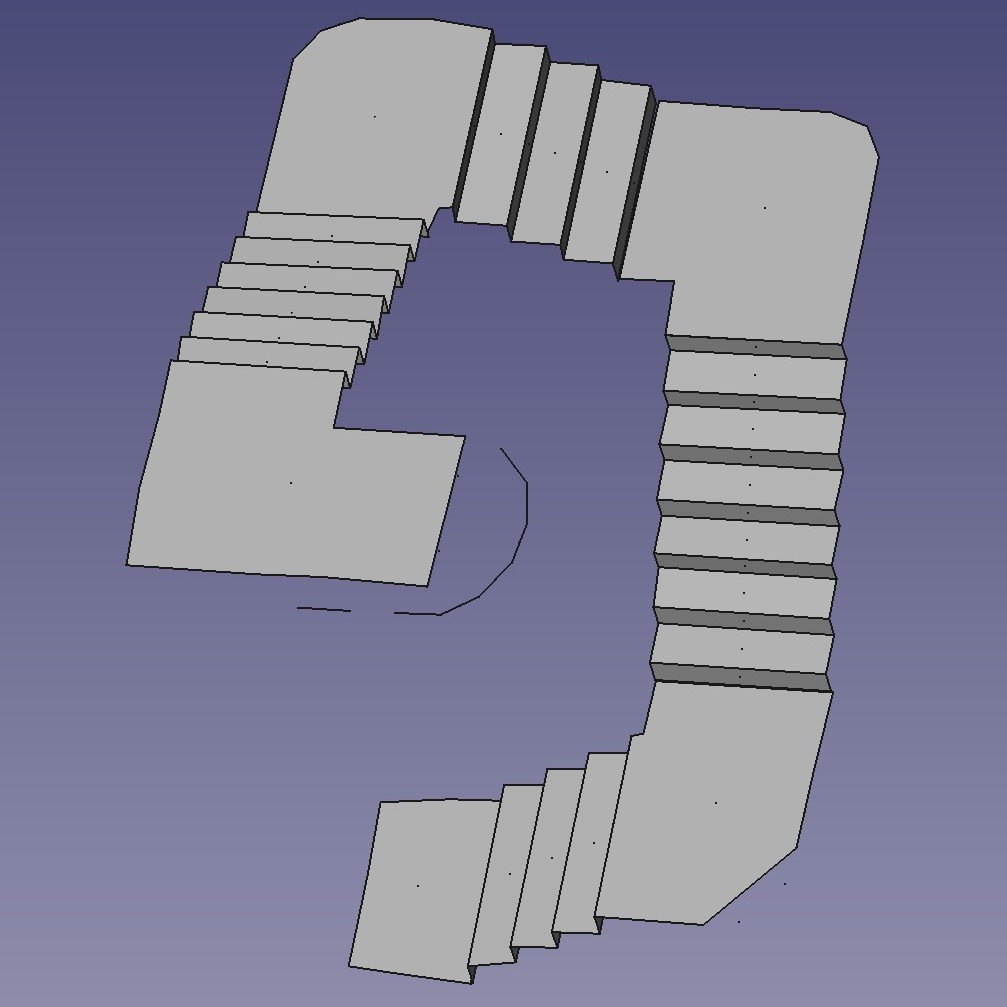
StairsMeasure Pro is the upgrade for businesses that need tighter tolerances than a measurement with tablet or phone allows.
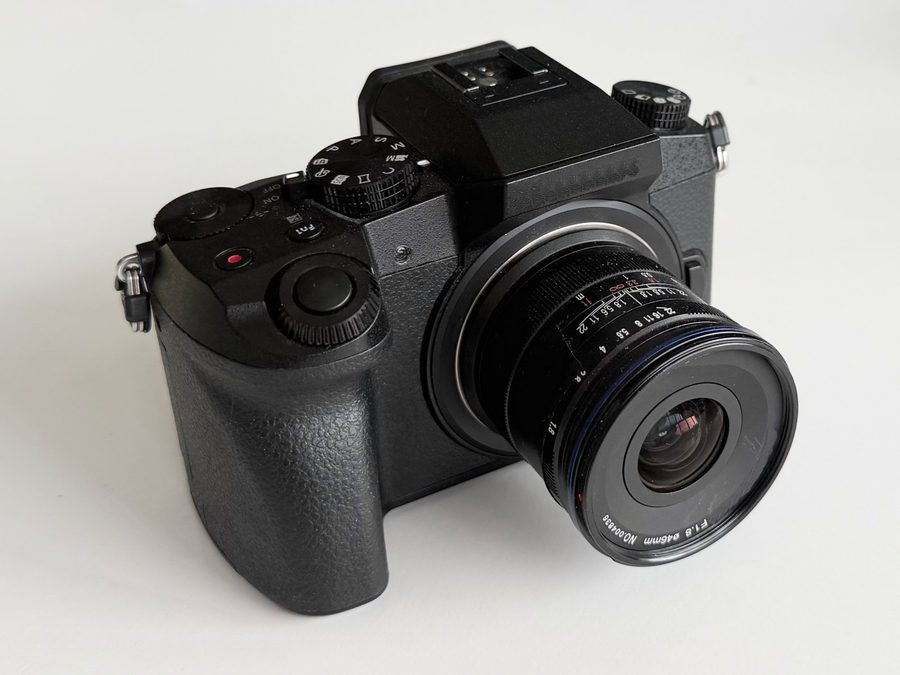
Instead of the device camera it works with an SLR with a precision fixed focal length and a more powerful flash. Procedure, targets and evaluation stay the same — you still measure alone and in one pass.
| Typical height deviation per floor | 3 to 5 mm |
|---|---|
| Camera | SLR with 24 mm precision fixed focal length |
| Flash | more powerful flash |
| Length standard | reference boards |
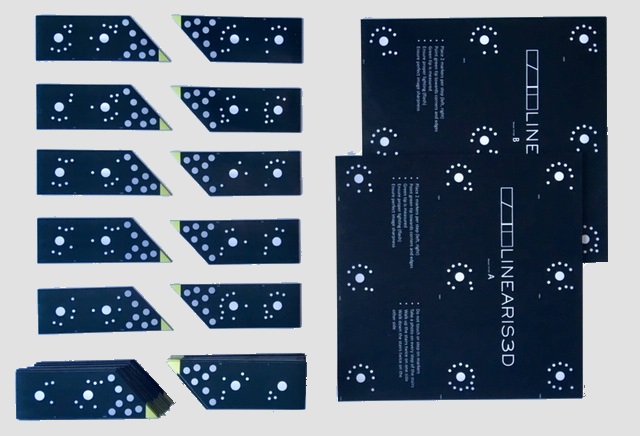
| Targets | Basic Kit, extendable with the Extended Kit |
| Export | IGES, DXF 2D, DXF 3D, STL |
| Software | Windows 10/11, 64 bit |
| Training | optional |
| Support | Web/e-mail/telephone |
Errors and technical changes excepted.
What matters with a staircase is not the deviation of a single point, but the error that accumulates over the height of one floor. That is what decides whether a prefabricated handrail or a lift rail still fits at the top.
| iPhone and iPad | 10–15 mm |
|---|---|
| StairsMeasure Pro | 3–5 mm |
The difference comes from the capture technique: an SLR with a fixed focal length produces a sharper, less distorted image than a device lens, and the more powerful flash lights even dark stairwells well enough for the targets to be detected cleanly.
These figures apply to a carefully executed measurement. How accurate an individual shot turns out also depends on the visibility of the targets, the lighting, the number of images and the chosen camera positions — places that can only be photographed from a narrow angle deviate more.
You continue to work with the same software and the same targets. Anyone already measuring with the stairs measurement system does not have to change either the procedure or the route into CAD: capture, calculation and export remain identical. The upgrade changes the capture technique, not the operation.
We will advise you on the equipment that suits your projects — and send you a demo kit on request.

 Deutsch